Just over a month ago, after the holiday of Simchat Torah, we finished our yearly cycle of reading the Torah and started anew. The first parasha, "Bereishit" (literally "In the Beginning", often translated as "Genesis"), recounts creation. The levels of depth in these lines are infinite.
This year, one particular concept was brought to my attention. About (almost) each thing created, it says, "Let there be...", "And there was...", and "It was good."
In his new book, "Covenant and Conversation," Rabbi Jonathan Sacks (Chief Rabbi of the UK), wrote a beautiful explanation of this concept. Whenever I include quotes in my explanation and application of this concept, it is from his book.
On a fundamental level, this account of Creation lays the groundwork for a Jewish approach to life. Life and the world are seen as inherently Good.
This begs the question, "If everything was created Good, how do people become evil?" Rabbi Sacks claims, "Their tragedy was that often they came from dysfunctional families in difficult conditions. No one took the time to care for them, support them ... They lacked a basic self-respect, a sense of their own worth. No one ever told them that they were good." This description refers to extreme cases, such as criminal offenders.
So if ignoring the good in an individual makes one being evil, how can we make people great?
By acknowledging the good in them.
"To see someone is good and to say so is a creative act - one of the great creative acts. ... Within almost all of us is something positive and unique, but which is all too easily injured, and which only grows when exposed to the sunlight of someone else's recognition and praise. To see the good in others and let them see themselves in the mirror of our regard is to help someone grow to become the best they can be. 'Greater,' says the Talmud, 'is one who causes others to do good than one who does good himself.' To help others become what they can be is to give birth to creativity in someone else's soul. This is done not by criticism or negativity but by searching out the good in others, and helping them see it, recognize it, own it, and live it." ... "When we recognize the goodness in someone, we do more than create it, we help it to become creative. This is what G-d does for us, and what He calls us to do for others."
I think this is a very powerful message for parenting. So often, parents feel an urge to criticize the things their child does wrong. Whether it's something simple, "You put your shirt on backwards again." Or something more damaging. Think of how good our children would feel if we acknowledged the good in everything they do. Recognize the positive effort, "Wow, you put your shirt on all by yourself! Can I help you turn it around the right way?"
I can only imagine the potential for this strategy as children get older. When children have hobbies and talents that begin to develop, a parent cheer leader and advocate (in a healthy way of course) can make the child truly feel GOOD.
Beyond parenting, this concept can be applied to all relationships in life. With parents and friends, it is not only important to see the good in them, but to tell them that you recognize it. By pointing out a good quality, it brings it to their attention. On one hand, it makes them feel good. Further, sometimes your acknowledgement of their strength causes them to feel a healthy sense of pride and exude that strength to a greater extent. You therefore make a contribution to the good they bring into the world. This is just about as close as we can get in this world to emulating Divine Creation.
Showing posts with label Parenting. Show all posts
Showing posts with label Parenting. Show all posts
Wednesday, November 21, 2012

Instilling Gratitude
Adina is finally reaching an age where she can make positive contributions to projects that we do together. Not only is she getting better with coloring, cutting, and gluing, but I see a blossoming in her ideas as well.
This week, I decided to do a Thanksgiving project with her. She doesn't really get the connection of the turkey animal to the turkey we eat yet, and I thought this whole concept would confuse her a bit. So instead, I decided to do a "Thankful Project." For the past week, at random points throughout the day, I would tell her something I was thankful for and ask her to do this as well. While I have taught her to say, "Thank you," when given something, we had never before discussed the feeling of gratitude.
Yesterday, for our morning activity, we made an "Adina Tree" and a "Mommy Tree" by tracing our hands and arms. Then, while Adina colored the "sunshine" all around the trees, I cut out leaves. (She could relate to this project because she has been very into noticing the changing colors of the leaves and pointing out whether trees still have leaves or if they've lost them all already). Before she glued each leaf on her tree, I asked her to tell me one thing she is thankful for. It was slow going at first, but then she kept saying so many more that I needed to add "stickers" to her finger because we were out of leaves.
At first, I thought he was asking questions to try to figure out if there was a reason for my not so cheerful mood. Then I realized he was giving me perspective. Yes, there were a couple of things to complain about. But look at all of the things to be thankful for! Just a few hours before, I had sat down with Adina discussing how many things we should be thankful for, and here she sees me telling Aba all the negatives.
This week, I decided to do a Thanksgiving project with her. She doesn't really get the connection of the turkey animal to the turkey we eat yet, and I thought this whole concept would confuse her a bit. So instead, I decided to do a "Thankful Project." For the past week, at random points throughout the day, I would tell her something I was thankful for and ask her to do this as well. While I have taught her to say, "Thank you," when given something, we had never before discussed the feeling of gratitude.

Now this project is all well and good, but the lesson for Mommy came later in the day.
Nap time didn't go quite as planned. I felt tired. The house was a mess and getting messier.
Yoni came home right in the middle of it.
Cheerfully, he asked, "How was your day sweetie?"
Poor guy. I started in on my laundry list of complaints.
Yoni calmly sat down and said to me, "Do you feel ok?"
"Yes," I responded.
"And the kids are healthy?" He asked.
"Yes, they are."
"Did you eat a good lunch and breakfast today?"
At first, I thought he was asking questions to try to figure out if there was a reason for my not so cheerful mood. Then I realized he was giving me perspective. Yes, there were a couple of things to complain about. But look at all of the things to be thankful for! Just a few hours before, I had sat down with Adina discussing how many things we should be thankful for, and here she sees me telling Aba all the negatives.
It seems as though the best way to teach children gratitude is to constantly dwell on things we are grateful for ourselves. Making thankful trees for art projects are fun, but I need to internalize the concept so that I can impart it on my kids. Lesson learned. :)
Sunday, November 4, 2012
A parent-child relationship: Mutual respect
Parents have a lot of responsibilities when it comes to child-rearing!
Yes, there are the responsibilities to feed, clothe, provide shelter, etc. to your children. Those are the easy ones. The hard ones don't come with such black and white, yes or no guidelines.
One particular responsibility that I have been thinking about a lot the past couple of days is teaching children what it is to respect. First and foremost, this begins with respecting their parents. Once that is mastered, this education extends to other adults, their friends, and everyone in the world around them.
Since it is very well-known that children do not learn from lectures, giving over a dissertation on the process of respect would be completely meaningless. How can one impart this very important lesson to their children?
Yesterday, as I thought about this concept, it all came together. Children are sponges, right? So the most important contribution to their lessons in respect must be observing respectful interactions. Yes, this of course means watching their parents treat others with respect. But arguably more important it means being treated with respect themselves. Not only does this serve to model how one acts respectably, but it also shows them how good it feels to be respected (on the receiving end). As much as people deny it, on a deep level children ultimately want to make their parents feel good. If they know how good it feels to be respected then they will treat their parents (and eventually others) in that same way.
So how do we treat children with respect?
It starts from infancy. The Baby Whisperer is very big on respect for infants. When you change a baby's diaper, talk through what you are going to do in the process. Show respect for the fact that you are throwing a baby onto a table, spreading his/her legs and making their wet tushie cold by taking the diaper off. Say, "I know this isn't so pleasant, but it's important to do so I can put a new, clean diaper on you and then you will be happy."
No matter how you decide to teach your child good sleeping habits, do it in a respectful way. While I am not necessarily of the "Cry it out" camp, I understand the rationale of those who are. If you believe in letting your baby cry, this might sound silly, but discuss it first. Show them the respect of acknowledging that they are a person with emotions that is about to undergo a difficult experience. Say, "It is very important that you learn how to sleep well. I have decided to let you stay in your crib until you fall asleep. I know this is difficult, and I want you to know that I love you very much, but I won't come back in the room until you wake up." Whether the child understands what you are saying or not, you are setting the tone for a lifelong relationship of mutual respect.
Into toddlerhood, this gets a lot more complicated because it becomes a two-way conversation. If I want Adina to use "manner words" when she makes requests of me, I must do the same when I make requests of her. If I want her to listen to me and do what I say, I must respect her when she asks me to do things. This does not mean I must curtail to her every beck and call. If she says, "Mommy, can I please eat five cupcakes right now?" I am not going to say, "Of course sweetie." But I am not going to respond with a harsh, "No!" either. I will respectfully decline her request. I might say, "I know those cupcakes look really good, but I don't think it is a good idea to eat five of them. Maybe you can have one right now and we will save another one for a special treat on Shabbat."
If this is the kind of modeling behavior she observes, then I can only hope that when I say, "Adina, can you please do...." she will respond respectfully. She might respond affirmatively, or she might say, "Mommy, I don't want to do that right now" and open the grounds for a respectful conversation. Since she is still 2, I will of course receive the occasional, "NO!" but I can only hope this decreases as she gets older. I know a few moms who are experts at imbibing their children with respect, and thank G-d, their elementary aged children are some of the most respectful people, let alone children, that I know. I can only hope I will be able to do half as good of a job in teaching respect to my own children.
A few other thoughts on internalizing a respect for your children...
About six months ago, I made a resolution to not speak negatively about Adina in her presence. It is very common during play dates or get togethers for the Moms to discuss their child's behavior within earshot of the child. While the child might be playing, their ears are still open. I still find myself doing this sometimes, but I am working really hard to stop it. The truth is, I ultimately want to avoid sharing negative components of my children's behavior at all with other people, unless it is with my husband or a close friend and for a constructive purpose.
In Judaism, there is a concept of Lashon Hara. This literally means, "Bad language," but it refers to using your words for an unnecessary or negative purpose. Speaking Lashon Hara is forbidden in Jewish Law. Most often, people view this Law as an instruction to refrain from gossip, but people rarely consider it gossip if they are speaking about their own children. But the truth is, children also feel embarassment. Children also feel shame. If children feel embarrassed at the hand of their own parent, the one who is supposed to love and protect them more than anyone in the world, it undermines any feeling they could have of being respected by their parent.
L'havdil (in a very different, but similar vein...)
Some of my clarity on this topic came about through experiences we had with Libby this week. The past few months, Libby has become a progressively more difficult dog. She was becoming very anxious. Every time we left the house, she barked uncontrollably. Multiple nights a week, she would bark and wake us up at 3 AM. I don't have any young babies at home right now, and being awake from 3-5 AM with a dog was not so much fun. I was at wits' end and on the verge of finding her a new home...
Then Yoni's parents came to visit for a long weekend. Libby slept next to their bed (and in the bed whenever Yoni's Dad had to leave the room for a few minutes...) and during those few days, her anxiety nearly disappeared. She sat quietly at the door and watched us leave time and again without a peep.
So after they left, and we really acknowledged the stark contrast in Libby's behavior, Yoni reluctantly made a suggestion. He asked, "Can Libby sleep in our room?" I have been resisting this for a very long time from the negative experiences I had during our transition to Seattle. When we lived in a small "Temporary Living Facility" in Altus, Oklahoma for a few months, I was very pregnant (with Ze'ev), sleeping on a pull out couch and Libby had to be in the room with us. Libby was anxious from all the transitions and woke us up multiple times a night. But what could be worse than her barking now? So I agreed to try it. She has been the happiest doggy I have ever seen this week. She sleeps quietly on our floor all night and is perfectly fine every time we leave the house during the day. She is even significantly calmer with guests because she is not craving love and attention. The truth is, we are not even actively giving her much more love, but simply sleeping in close proximity to her "masters" makes her feel loved and secure.
This is not meant to be an endorsement of co-sleeping, but simply an observation. For months, I tried to teach her how I wanted her to behave with force. Every time she barked, I got in her face and said, "NO BARK!" She didn't want to bark, but her emotions were out of control from not feeling loved and it was her only outlet. Now, she is so happy to finally feel in control of herself since the anxiety has subsided. She is so happy to please us by obeying our commands. All she needed was to feel loved and respected.
The good thing with Libby is that dogs have very poor, short-term memories. She now acts as if we've treated her like this her whole life and never left her to sleep alone. Children can be slightly less forgiving. But resolve and persistence can go a long way.
Yes, there are the responsibilities to feed, clothe, provide shelter, etc. to your children. Those are the easy ones. The hard ones don't come with such black and white, yes or no guidelines.
One particular responsibility that I have been thinking about a lot the past couple of days is teaching children what it is to respect. First and foremost, this begins with respecting their parents. Once that is mastered, this education extends to other adults, their friends, and everyone in the world around them.
Since it is very well-known that children do not learn from lectures, giving over a dissertation on the process of respect would be completely meaningless. How can one impart this very important lesson to their children?
Yesterday, as I thought about this concept, it all came together. Children are sponges, right? So the most important contribution to their lessons in respect must be observing respectful interactions. Yes, this of course means watching their parents treat others with respect. But arguably more important it means being treated with respect themselves. Not only does this serve to model how one acts respectably, but it also shows them how good it feels to be respected (on the receiving end). As much as people deny it, on a deep level children ultimately want to make their parents feel good. If they know how good it feels to be respected then they will treat their parents (and eventually others) in that same way.
So how do we treat children with respect?
It starts from infancy. The Baby Whisperer is very big on respect for infants. When you change a baby's diaper, talk through what you are going to do in the process. Show respect for the fact that you are throwing a baby onto a table, spreading his/her legs and making their wet tushie cold by taking the diaper off. Say, "I know this isn't so pleasant, but it's important to do so I can put a new, clean diaper on you and then you will be happy."
No matter how you decide to teach your child good sleeping habits, do it in a respectful way. While I am not necessarily of the "Cry it out" camp, I understand the rationale of those who are. If you believe in letting your baby cry, this might sound silly, but discuss it first. Show them the respect of acknowledging that they are a person with emotions that is about to undergo a difficult experience. Say, "It is very important that you learn how to sleep well. I have decided to let you stay in your crib until you fall asleep. I know this is difficult, and I want you to know that I love you very much, but I won't come back in the room until you wake up." Whether the child understands what you are saying or not, you are setting the tone for a lifelong relationship of mutual respect.
Into toddlerhood, this gets a lot more complicated because it becomes a two-way conversation. If I want Adina to use "manner words" when she makes requests of me, I must do the same when I make requests of her. If I want her to listen to me and do what I say, I must respect her when she asks me to do things. This does not mean I must curtail to her every beck and call. If she says, "Mommy, can I please eat five cupcakes right now?" I am not going to say, "Of course sweetie." But I am not going to respond with a harsh, "No!" either. I will respectfully decline her request. I might say, "I know those cupcakes look really good, but I don't think it is a good idea to eat five of them. Maybe you can have one right now and we will save another one for a special treat on Shabbat."
If this is the kind of modeling behavior she observes, then I can only hope that when I say, "Adina, can you please do...." she will respond respectfully. She might respond affirmatively, or she might say, "Mommy, I don't want to do that right now" and open the grounds for a respectful conversation. Since she is still 2, I will of course receive the occasional, "NO!" but I can only hope this decreases as she gets older. I know a few moms who are experts at imbibing their children with respect, and thank G-d, their elementary aged children are some of the most respectful people, let alone children, that I know. I can only hope I will be able to do half as good of a job in teaching respect to my own children.
A few other thoughts on internalizing a respect for your children...
About six months ago, I made a resolution to not speak negatively about Adina in her presence. It is very common during play dates or get togethers for the Moms to discuss their child's behavior within earshot of the child. While the child might be playing, their ears are still open. I still find myself doing this sometimes, but I am working really hard to stop it. The truth is, I ultimately want to avoid sharing negative components of my children's behavior at all with other people, unless it is with my husband or a close friend and for a constructive purpose.
In Judaism, there is a concept of Lashon Hara. This literally means, "Bad language," but it refers to using your words for an unnecessary or negative purpose. Speaking Lashon Hara is forbidden in Jewish Law. Most often, people view this Law as an instruction to refrain from gossip, but people rarely consider it gossip if they are speaking about their own children. But the truth is, children also feel embarassment. Children also feel shame. If children feel embarrassed at the hand of their own parent, the one who is supposed to love and protect them more than anyone in the world, it undermines any feeling they could have of being respected by their parent.
L'havdil (in a very different, but similar vein...)
Some of my clarity on this topic came about through experiences we had with Libby this week. The past few months, Libby has become a progressively more difficult dog. She was becoming very anxious. Every time we left the house, she barked uncontrollably. Multiple nights a week, she would bark and wake us up at 3 AM. I don't have any young babies at home right now, and being awake from 3-5 AM with a dog was not so much fun. I was at wits' end and on the verge of finding her a new home...
Then Yoni's parents came to visit for a long weekend. Libby slept next to their bed (and in the bed whenever Yoni's Dad had to leave the room for a few minutes...) and during those few days, her anxiety nearly disappeared. She sat quietly at the door and watched us leave time and again without a peep.
So after they left, and we really acknowledged the stark contrast in Libby's behavior, Yoni reluctantly made a suggestion. He asked, "Can Libby sleep in our room?" I have been resisting this for a very long time from the negative experiences I had during our transition to Seattle. When we lived in a small "Temporary Living Facility" in Altus, Oklahoma for a few months, I was very pregnant (with Ze'ev), sleeping on a pull out couch and Libby had to be in the room with us. Libby was anxious from all the transitions and woke us up multiple times a night. But what could be worse than her barking now? So I agreed to try it. She has been the happiest doggy I have ever seen this week. She sleeps quietly on our floor all night and is perfectly fine every time we leave the house during the day. She is even significantly calmer with guests because she is not craving love and attention. The truth is, we are not even actively giving her much more love, but simply sleeping in close proximity to her "masters" makes her feel loved and secure.
This is not meant to be an endorsement of co-sleeping, but simply an observation. For months, I tried to teach her how I wanted her to behave with force. Every time she barked, I got in her face and said, "NO BARK!" She didn't want to bark, but her emotions were out of control from not feeling loved and it was her only outlet. Now, she is so happy to finally feel in control of herself since the anxiety has subsided. She is so happy to please us by obeying our commands. All she needed was to feel loved and respected.
The good thing with Libby is that dogs have very poor, short-term memories. She now acts as if we've treated her like this her whole life and never left her to sleep alone. Children can be slightly less forgiving. But resolve and persistence can go a long way.
Tuesday, October 23, 2012
Photos help remind me where the days go...
The past few weeks (months?) have been a bit of a whirlwind, but we are slowly settling into a bit of a routine. As I mentioned before, Yoni returned from his deployment the first day of Sukkot. The holiday lasts 8 days (days filled with synagogue, food, and moving back home from the Air Force Base). The very next day, Yoni returned to work and found out that the following morning at 5 AM he had to leave for a trip. Now this trip was only a week away, so compared to the deployment it feels like nothing, but it kind of took me by surprise because I didn't feel like we had a moment to take a step back and relax together at all since his return. But no rest for the weary - on that Thursday morning, he was off!
During his time away, I had a lot of fun with my new camera I got for my birthday from my parents (Thanks! :) ) Here are some black and white head shots of the kids sitting at the table during lunch time:

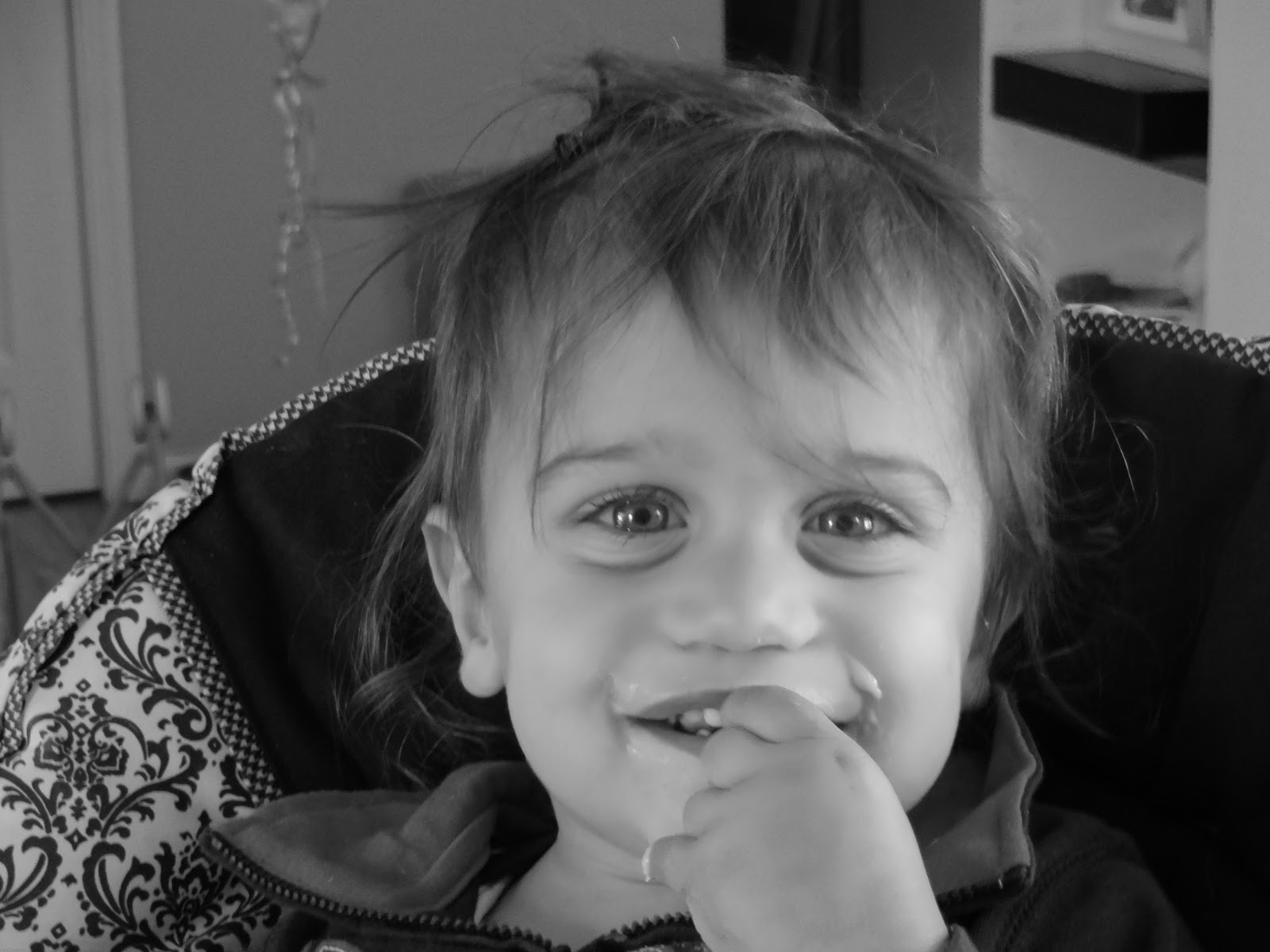
And a color shot of Ze'ev enjoying his yogurt...

Looking at these pictures again now, I want to share how much these smiling little faces get me through day after day when Yoni is away. I absolutely love spending my days with them. Yes, it is a lot of work! Yes, I get very tired! But I can't imagine doing anything else with my life... I can't imagine anything else bringing me more joy or giving me more fulfillment than raising these two beautiful souls...
The timing actually worked out quite perfectly for me, because just a couple days after Yoni left, my parents arrived for a short visit. They were disappointed that they missed seeing him again, but at least I had company for the majority of his absence. Here are some pictures during their time here:


And a black and white shot of story time with Poppy...

Here's another fun photo I took of Adina at the park...


And now, back to life as "normal."
 |
| Just hanging out reading a book |
 |
| Ze'ev's new shirt celebrating Aba's promotion to Captain during his deployment |
 |
| A cute picture of Adina hugging her good friend during one of their many play dates |
Thursday, August 9, 2012
Living by the calendar...
I think I have discovered the most negative aspect of having a mathematical brain. Countless times each day, I calculate the percentage of the deployment that has passed and how far we still have to go.
On Monday, the day after my Dad left, I thought, "Wow! It's been almost two weeks already! That's amazing! 20% done!"
But Monday feels like weeks ago and today I find myself thinking, "Wow. It has been only just over two weeks. We still have almost 80% to go!"
Thank G-d, when we are in the midst of the days we are generally doing well. I try to coordinate activities for the kids as best I can, and as long as they get their sleep and are eating well, they behave pretty nicely and make life doable for me. Unfortunately, on those days when someone doesn't nap so well or someone refuses to eat everything I put on their plate and therefore gets hungry and cranky, I sorely miss having reinforcements!
I have decided that I for sure need to figure out a new plan for these last 8 weeks. During the week my parents were here things went great. But the days before that and the days since then, I find myself walking a tight rope, constantly on the verge of losing my patience. This is very hard for me, because the parenting skill I have been trying so hard to hone in on in the past year has been my patience. But when it is tested over and over again all day, with no one on my side, and no relief during waking hours, I would be superhuman if I could maintain it.
Now I have to determine the best strategy to maintain my emotional sanity for the rest of the deployment. Any suggestions would be greatly appreciated. :)
On Monday, the day after my Dad left, I thought, "Wow! It's been almost two weeks already! That's amazing! 20% done!"
But Monday feels like weeks ago and today I find myself thinking, "Wow. It has been only just over two weeks. We still have almost 80% to go!"
Thank G-d, when we are in the midst of the days we are generally doing well. I try to coordinate activities for the kids as best I can, and as long as they get their sleep and are eating well, they behave pretty nicely and make life doable for me. Unfortunately, on those days when someone doesn't nap so well or someone refuses to eat everything I put on their plate and therefore gets hungry and cranky, I sorely miss having reinforcements!
I have decided that I for sure need to figure out a new plan for these last 8 weeks. During the week my parents were here things went great. But the days before that and the days since then, I find myself walking a tight rope, constantly on the verge of losing my patience. This is very hard for me, because the parenting skill I have been trying so hard to hone in on in the past year has been my patience. But when it is tested over and over again all day, with no one on my side, and no relief during waking hours, I would be superhuman if I could maintain it.
Now I have to determine the best strategy to maintain my emotional sanity for the rest of the deployment. Any suggestions would be greatly appreciated. :)
Monday, July 16, 2012
On "discipline" or "educating" children...
When Adina was a baby I devoured book after book on parenting babies. While no particular book spoke to me in its entirety, I found gems in nearly all of the books I read.
One of these books (I can't even remember which one anymore...) claims that there are only three things which your baby needs in the first year of life in order to thrive and reach their full potential (full potential of a 1 year-old that is).
What are these three?
1) A lot of love
2) Good sleep habits
3) Good eating habits
The first one is easy. The second two take a bit more work! Some kids can make these easy on their parents... There are parents out there who get lucky enough to get those 5% of kids who are resilient. No matter how you parent them, they will sleep well when they need it and they will eat whatever food is given to them when they're hungry.
I didn't get those kids. Thank G-d, my kids aren't in the other 5% either. That other 5%, on the other end of the spectrum - no matter how one might parent, they can't sleep well and their appetite does not give them enough motivation to eat the food placed in front of them...
For the other 90%, it is up to the parents to condition and teach the children in good sleeping and eating habits. So I read a LOT of books on sleeping. I didn't agree with cry-it-out, but I also did not agree with rocking babies to sleep each time they woke throughout the night (this creates a dependency in the child where they can not learn how to sleep on their own without the parents' presence). This whole sleep issue is not the topic of this particular post, so I am not going to expound on it much more (maybe in another post, on another day...), but the point is that I read all of the different views and created a strategy of my own to teach my children how to fall asleep when they are tired and sleep until they are ready to wake up.
Now, my parenting adventure has taken me into a whole new domain! Adina is no longer a baby and is rapidly growing into a little child. I give her a direction, she looks at me, with THAT look, and does exactly the opposite of what I just asked her to do.
So how do I teach her that when Mommy says something she needs to be respectful and listen?
Ready or not, Amazon, here I come! And my library grows...
Over the past few months, I have read parts of half a dozen books on toddlers and early childhood. Instead of trying to design the wheel from scratch, making mistake after mistake until I might stumble upon a strategy that works, I figured I would see what other people have to say on raising children...
Once again, no single philosophy jives with me completely. Some make more sense than others, but I am currently in the process of taking bits and pieces from each to create the approach which works well with my parenting philosophies and my family.
I thought I would share here what I like and don't like from different books that I have read. If anyone has additional comments or disagrees with anything I write, please share it in the comments. I would love to hear what you have to say.
The first book I read -
1, 2, 3, Magic!
In a nutshell, this book (which sold over a million copies!) says that children do not have the reasoning capacity to listen to explanations on why they should be acting differently. If they misbehave, a parent should simply say, "That's 1." If they continue the behavior, "That's 2." And if it still doesn't stop, "That's 3." And they are put in time out. Even after the time out, this book says that no explanation is needed (and would actuallly take away from the disciplining experience). They had their consequence, you got the message across that they did something wrong, and that is that.
So I tried it for a day...
It kind of worked, but it didn't feel right. My daughter is only 2, and she already has the ability to comprehend why she should and should not act in certain ways. It seemed so belittling to me. And then I was on to my next book and boy did it bash on the 1, 2, 3 strategy. The main criticism it had was the implications for the future. Yes, this strategy can work well on toddlers. But toddlerhood parallels teenage years. Can you see a 14 year-old taking a parent seriously when they get caught doing something they are not supposed to do and they hear, "That's 1...". Now is the time to build a deep sense of respect and obedience.
Which leads me to the next book... Love and Logic.
I like a LOT of what this book has to say. The key here is empathy. When your child misbehaves, treat the negative behavior as the bad guy (rather than yourself). "Aw, sweetie, I am so sorry that you did ... ... it looks like you will have to .... (insert logical consequence here)." The key is to think of consequences unique for each situation that make sense to logically result from the misbehavior. This is helpful as children grow, because this is the way that the world actually works! If a 16 year-old is driving down the high way a little too fast, they won't get a warning, "That's 1...". They will get pulled over and receive a ticket. The police officer is not seen as the bad guy. The police officer observed the crime and is doing his job by giving out the punishment for that particular offense.
This strategy requires a calm disposition, a lot of patience and quick thinking. It is not easy, but I am striving toward these ideals. As the child gets older, they will see the parent as their partner in the journey through life.
The one component of the book that I do not like is the "energy drain" strategy. This says that if kids are doing something draining, you should say, "You're draining my energy. You have to do some chores now to put that energy back into me." I don't like this for two reasons - 1) It is silly. 2) Adina loves chores right now. If there's a night that Ze'ev needs to be in bed before she does, it is a humongous treat for her to be able to take a bath with him and then get in pajamas and come downstairs to help Mommy clean before she has to go to sleep. I do not want to start giving her any negative associations with "chores" (I don't like this word anyways...).
Another book I have been reading has helped a lot in parenting in general, but does not really discuss the concept of teaching a child right from wrong It gives wonderful strategies to build a child's confidence and sense of self. This is the book, "Liberated Parents, Liberated Children." The main gist of the philosophy is that a child is a thinking, feeling being who is entitled to their thoughts and feelings. How many times do you hear a parent respond to, "Mommy, I'm hungry!" with, "You can't be, I just fed you!"? This makes the child feel very small. If a parent does not want to give the child something to eat, they could instead say, "Hm, I hear that you're saying you are hungry now. I do not want you to eat a snack because I made a nice lunch for you and we are going to eat in 20 minutes. Do you want to come play a game with me in the mean time?" The other important message they convey is to avoid using labels for your children. This of course includes not saying, "You are a bad kid," "You are lazy," etc... But interestingly enough, it also includes, "You are such a good girl," "You are brilliant!", etc...
Why? These labels can be overwhelming to a child. It is much more effective to describe their actions that you appreciated. Such as, "You used your brain very nicely to put all of those pieces of the puzzle in the right places."
Even though this book does not deal directly with disciplining, using the strategies to build the child's self worth actually minimizes the number of times I will need to use the other strategies. When a child feels confident and happy, they don't have the same internal desire to act out.
The book I am reading right now is called, "Bringing up Bebe," about an American woman who moved to France and had a baby. She is comparing American and French parenting styles. I have not gotten very far in it yet, but she mentions how there is no word in French that they really use for "disciplining." Instead they call all aspects of child-rearing "educating." This makes so much sense. What is discipline? Educating your child how to be a good person and behave correctly. When it is looked at as an educational experience, it is much easier to stay calm when repeating the same directions day after day. No (good) teacher would yell at a kindergartner for not learning how to read soon enough. So why should a parent yell at a child who has not yet mastered the skill of following directions? You just teach again and again, day after day, and one day it will click.
The other big difference she sees between the American Parent and the French parent is how involved they are. The American parent can be described as a "helicopter parent," always on top of the child, controlling every situation, and correcting every step. The French parent is much more laid back and only "educates" when necessary.
This concept was particularly interesting to me. With the baby components of parenting, I was quite a helicopter (and still am to some extent!) When it comes to my kids' sleep, I will do everything in my control to make sure they get it and get it well. Part of this is selfish, because they are different children if they get woken up prematurely. They don't eat well, don't listen, and are just flat out grumpy. But when it comes to all other aspects of parenting, I am trying very hard to let them do their own thing. I try not to hover, and not to remove any obstacles which could get in the way.
I am excited to see how this process continues to unfold, as I read more and learn how different strategies affect the long-term behavior trends of the children.
This whole experience has been one more example of how being a stay-at-home Mom is the most challenging and intellectually stimulating job that I could imagine having at this point in my life.
One of these books (I can't even remember which one anymore...) claims that there are only three things which your baby needs in the first year of life in order to thrive and reach their full potential (full potential of a 1 year-old that is).
What are these three?
1) A lot of love
2) Good sleep habits
3) Good eating habits
The first one is easy. The second two take a bit more work! Some kids can make these easy on their parents... There are parents out there who get lucky enough to get those 5% of kids who are resilient. No matter how you parent them, they will sleep well when they need it and they will eat whatever food is given to them when they're hungry.
I didn't get those kids. Thank G-d, my kids aren't in the other 5% either. That other 5%, on the other end of the spectrum - no matter how one might parent, they can't sleep well and their appetite does not give them enough motivation to eat the food placed in front of them...
For the other 90%, it is up to the parents to condition and teach the children in good sleeping and eating habits. So I read a LOT of books on sleeping. I didn't agree with cry-it-out, but I also did not agree with rocking babies to sleep each time they woke throughout the night (this creates a dependency in the child where they can not learn how to sleep on their own without the parents' presence). This whole sleep issue is not the topic of this particular post, so I am not going to expound on it much more (maybe in another post, on another day...), but the point is that I read all of the different views and created a strategy of my own to teach my children how to fall asleep when they are tired and sleep until they are ready to wake up.
Now, my parenting adventure has taken me into a whole new domain! Adina is no longer a baby and is rapidly growing into a little child. I give her a direction, she looks at me, with THAT look, and does exactly the opposite of what I just asked her to do.
So how do I teach her that when Mommy says something she needs to be respectful and listen?
Ready or not, Amazon, here I come! And my library grows...
Over the past few months, I have read parts of half a dozen books on toddlers and early childhood. Instead of trying to design the wheel from scratch, making mistake after mistake until I might stumble upon a strategy that works, I figured I would see what other people have to say on raising children...
Once again, no single philosophy jives with me completely. Some make more sense than others, but I am currently in the process of taking bits and pieces from each to create the approach which works well with my parenting philosophies and my family.
I thought I would share here what I like and don't like from different books that I have read. If anyone has additional comments or disagrees with anything I write, please share it in the comments. I would love to hear what you have to say.
The first book I read -
1, 2, 3, Magic!
In a nutshell, this book (which sold over a million copies!) says that children do not have the reasoning capacity to listen to explanations on why they should be acting differently. If they misbehave, a parent should simply say, "That's 1." If they continue the behavior, "That's 2." And if it still doesn't stop, "That's 3." And they are put in time out. Even after the time out, this book says that no explanation is needed (and would actuallly take away from the disciplining experience). They had their consequence, you got the message across that they did something wrong, and that is that.
So I tried it for a day...
It kind of worked, but it didn't feel right. My daughter is only 2, and she already has the ability to comprehend why she should and should not act in certain ways. It seemed so belittling to me. And then I was on to my next book and boy did it bash on the 1, 2, 3 strategy. The main criticism it had was the implications for the future. Yes, this strategy can work well on toddlers. But toddlerhood parallels teenage years. Can you see a 14 year-old taking a parent seriously when they get caught doing something they are not supposed to do and they hear, "That's 1...". Now is the time to build a deep sense of respect and obedience.
Which leads me to the next book... Love and Logic.
I like a LOT of what this book has to say. The key here is empathy. When your child misbehaves, treat the negative behavior as the bad guy (rather than yourself). "Aw, sweetie, I am so sorry that you did ... ... it looks like you will have to .... (insert logical consequence here)." The key is to think of consequences unique for each situation that make sense to logically result from the misbehavior. This is helpful as children grow, because this is the way that the world actually works! If a 16 year-old is driving down the high way a little too fast, they won't get a warning, "That's 1...". They will get pulled over and receive a ticket. The police officer is not seen as the bad guy. The police officer observed the crime and is doing his job by giving out the punishment for that particular offense.
This strategy requires a calm disposition, a lot of patience and quick thinking. It is not easy, but I am striving toward these ideals. As the child gets older, they will see the parent as their partner in the journey through life.
The one component of the book that I do not like is the "energy drain" strategy. This says that if kids are doing something draining, you should say, "You're draining my energy. You have to do some chores now to put that energy back into me." I don't like this for two reasons - 1) It is silly. 2) Adina loves chores right now. If there's a night that Ze'ev needs to be in bed before she does, it is a humongous treat for her to be able to take a bath with him and then get in pajamas and come downstairs to help Mommy clean before she has to go to sleep. I do not want to start giving her any negative associations with "chores" (I don't like this word anyways...).
Another book I have been reading has helped a lot in parenting in general, but does not really discuss the concept of teaching a child right from wrong It gives wonderful strategies to build a child's confidence and sense of self. This is the book, "Liberated Parents, Liberated Children." The main gist of the philosophy is that a child is a thinking, feeling being who is entitled to their thoughts and feelings. How many times do you hear a parent respond to, "Mommy, I'm hungry!" with, "You can't be, I just fed you!"? This makes the child feel very small. If a parent does not want to give the child something to eat, they could instead say, "Hm, I hear that you're saying you are hungry now. I do not want you to eat a snack because I made a nice lunch for you and we are going to eat in 20 minutes. Do you want to come play a game with me in the mean time?" The other important message they convey is to avoid using labels for your children. This of course includes not saying, "You are a bad kid," "You are lazy," etc... But interestingly enough, it also includes, "You are such a good girl," "You are brilliant!", etc...
Why? These labels can be overwhelming to a child. It is much more effective to describe their actions that you appreciated. Such as, "You used your brain very nicely to put all of those pieces of the puzzle in the right places."
Even though this book does not deal directly with disciplining, using the strategies to build the child's self worth actually minimizes the number of times I will need to use the other strategies. When a child feels confident and happy, they don't have the same internal desire to act out.
The book I am reading right now is called, "Bringing up Bebe," about an American woman who moved to France and had a baby. She is comparing American and French parenting styles. I have not gotten very far in it yet, but she mentions how there is no word in French that they really use for "disciplining." Instead they call all aspects of child-rearing "educating." This makes so much sense. What is discipline? Educating your child how to be a good person and behave correctly. When it is looked at as an educational experience, it is much easier to stay calm when repeating the same directions day after day. No (good) teacher would yell at a kindergartner for not learning how to read soon enough. So why should a parent yell at a child who has not yet mastered the skill of following directions? You just teach again and again, day after day, and one day it will click.
The other big difference she sees between the American Parent and the French parent is how involved they are. The American parent can be described as a "helicopter parent," always on top of the child, controlling every situation, and correcting every step. The French parent is much more laid back and only "educates" when necessary.
This concept was particularly interesting to me. With the baby components of parenting, I was quite a helicopter (and still am to some extent!) When it comes to my kids' sleep, I will do everything in my control to make sure they get it and get it well. Part of this is selfish, because they are different children if they get woken up prematurely. They don't eat well, don't listen, and are just flat out grumpy. But when it comes to all other aspects of parenting, I am trying very hard to let them do their own thing. I try not to hover, and not to remove any obstacles which could get in the way.
I am excited to see how this process continues to unfold, as I read more and learn how different strategies affect the long-term behavior trends of the children.
This whole experience has been one more example of how being a stay-at-home Mom is the most challenging and intellectually stimulating job that I could imagine having at this point in my life.
Thursday, July 5, 2012
"My baby misses my Aba"
The first few times Yoni went away on trips for the Air Force, Adina had a tough time. She was almost two years old and she couldn't quite understand the concept of going away and coming back home. Each time he left, she got devastated and each time he came home she spent almost an entire day being mad at him. Eventually she started getting the hang of it. She still could not verbalize her feelings, but she started giving him really big hugs the day before he left, going about life normally, and then being happy to see him upon his return, rather than resentful.
This past week I saw a major turning point in her processing of the experience. On Tuesday, Yoni left in the afternoon. She was awake, so she saw him put his bags in the car and gave him a hug as he walked out the door. We purposely try to make these experiences as light-hearted as possible for her. For better or worse, she will have a lot of goodbyes and reunions throughout her life. If we condition her to take it in stride, knowing that the separation is temporary and the reunion will come soon, it will make these transitions much easier for her in the long run. I can not see any benefit to conditioning her with tearful separations at each and every goodbye. Between Aba's absences and the constant "Hi"'s and "Goodbye"'s from the family we are so blessed to have visit every few weeks, this would create a lot of sadness in a little heart.
On Tuesday evening, about an hour or two after Yoni's departure, Adina was caring for her doll as she usually does (rocking her, changing her diaper, singing her a song), and she walked over to me. She said, "Mommy, my baby misses my Aba." I said, "Aw, I know it's so hard for baby when Aba has to go on the airplane. Does your baby need a hug?" She said yes, and I gave her and her baby a big hug together. Since then, once or twice a day, she says to her baby, "Aw, you miss my Aba, here's a big huggie. I love you." And then I am sure to give her a hug soon after. I was so proud of her and think this is a very healthy, good way of dealing with the emotions she feels in Aba's absence.
His next trip is in three weeks and will be a long one - a 2 month deployment. I pray that I am given the strength to teach Adina the best coping strategies and to help her through the experience while maintaining a positive association with it all.
While Ze'ev is still too young to understand this all on an intellectual level, he is just getting old enough to feel the emotions of Aba's absence. He knows Yoni a lot better now than he did at the last deployment (when Ze'ev was only 6 months). I think it will be confusing for him, but probably not quite as difficult as it will be when he's older. He still doesn't get it quite yet. When we Skype, he reaches his arms out to the computer and gets frustrated he can't reach Aba, but doesn't know what that means.
This past week I saw a major turning point in her processing of the experience. On Tuesday, Yoni left in the afternoon. She was awake, so she saw him put his bags in the car and gave him a hug as he walked out the door. We purposely try to make these experiences as light-hearted as possible for her. For better or worse, she will have a lot of goodbyes and reunions throughout her life. If we condition her to take it in stride, knowing that the separation is temporary and the reunion will come soon, it will make these transitions much easier for her in the long run. I can not see any benefit to conditioning her with tearful separations at each and every goodbye. Between Aba's absences and the constant "Hi"'s and "Goodbye"'s from the family we are so blessed to have visit every few weeks, this would create a lot of sadness in a little heart.
On Tuesday evening, about an hour or two after Yoni's departure, Adina was caring for her doll as she usually does (rocking her, changing her diaper, singing her a song), and she walked over to me. She said, "Mommy, my baby misses my Aba." I said, "Aw, I know it's so hard for baby when Aba has to go on the airplane. Does your baby need a hug?" She said yes, and I gave her and her baby a big hug together. Since then, once or twice a day, she says to her baby, "Aw, you miss my Aba, here's a big huggie. I love you." And then I am sure to give her a hug soon after. I was so proud of her and think this is a very healthy, good way of dealing with the emotions she feels in Aba's absence.
His next trip is in three weeks and will be a long one - a 2 month deployment. I pray that I am given the strength to teach Adina the best coping strategies and to help her through the experience while maintaining a positive association with it all.
While Ze'ev is still too young to understand this all on an intellectual level, he is just getting old enough to feel the emotions of Aba's absence. He knows Yoni a lot better now than he did at the last deployment (when Ze'ev was only 6 months). I think it will be confusing for him, but probably not quite as difficult as it will be when he's older. He still doesn't get it quite yet. When we Skype, he reaches his arms out to the computer and gets frustrated he can't reach Aba, but doesn't know what that means.
Monday, June 25, 2012
Summer Days!
Our summer has officially begun!
Adina's round robin play group is over, and I get the kiddos to myself all day every day!
Thank G-d, we are really getting into a good routine with it all and it is going well. The timing of things was really on my side, because just about three weeks ago Ze'ev decided to drop his second nap for good! He now naps on the exact same schedule as Adina. Not only does that mean I get a break of a couple hours right in the middle of my day, but it also means that we can actually leave the house for two extended periods of time! It used to be that Ze'ev would nap 9:30-11, Adina 12-2:30, and then Ze'ev again from 3-4:30. This made for a very housebound day (Yes, I am one of those Moms who is pretty adamant on routine and being in a quiet crib environment for nap time).
Now, with Ze'ev napping the same time as Adina we have the whole morning together and then again in the afternoon we have a few hours to do an activity before dinner time. I am trying to create as much of a routine as is possible for our days while also allowing for fun activities and excursions. Adina is taking summer gymnastics classes one day a week, we are attending a couple different library story times and becoming frequenters to some of the best parks.
I think in many ways it is very good for both me and the kids to have so much time together. Adina especially receives a lot of security from spending a lot of time with Mommy. The more time she spends with me, the more she feels comfortable venturing out. It's the whole concept of a "secure base."
Anyway, wish me luck as I juggle two toddlers this summer, and if all goes well I am looking forward to keeping both of them home with me all next year as well! :)
Adina's round robin play group is over, and I get the kiddos to myself all day every day!
Thank G-d, we are really getting into a good routine with it all and it is going well. The timing of things was really on my side, because just about three weeks ago Ze'ev decided to drop his second nap for good! He now naps on the exact same schedule as Adina. Not only does that mean I get a break of a couple hours right in the middle of my day, but it also means that we can actually leave the house for two extended periods of time! It used to be that Ze'ev would nap 9:30-11, Adina 12-2:30, and then Ze'ev again from 3-4:30. This made for a very housebound day (Yes, I am one of those Moms who is pretty adamant on routine and being in a quiet crib environment for nap time).
Now, with Ze'ev napping the same time as Adina we have the whole morning together and then again in the afternoon we have a few hours to do an activity before dinner time. I am trying to create as much of a routine as is possible for our days while also allowing for fun activities and excursions. Adina is taking summer gymnastics classes one day a week, we are attending a couple different library story times and becoming frequenters to some of the best parks.
I think in many ways it is very good for both me and the kids to have so much time together. Adina especially receives a lot of security from spending a lot of time with Mommy. The more time she spends with me, the more she feels comfortable venturing out. It's the whole concept of a "secure base."
Anyway, wish me luck as I juggle two toddlers this summer, and if all goes well I am looking forward to keeping both of them home with me all next year as well! :)
Tuesday, May 8, 2012
Good morning sunshine :)
Last week, after I wrote my entry, I had a realization. Beyond the fact that I'm getting sleep, I think the (relative) calmness of our life has contributed to my reawakened desire for creativity. In the past year, I have not had one major transition. No moving. No wedding. No baby. Yea, Yoni had a little deployment, but in the scheme of transitions, I consider that minor... From June 2007 until April 2011, we had at least two major transitions a year...
While thank G-d, they were all wonderful things, they nevertheless drain a lot of energy. In the temporary absence of these major transitions, my energy can be focused elsewhere - on parenting, being a good wife, and creating!
With that in mind, I have been thinking a lot about the beauty in our routine and our predictable lifestyle these days. Over the weekend, Adina and I got a stomach bug and we weren't feeling too hot for a day or so. Today, when we both woke up feeling healthy, I really appreciated feeling joy in spending the morning with the kiddos...
Good morning sunshine,
Good morning blue skies,
Good morning my sweet baby,
And your sweet blue eyes.
Come snuggle with me,
Rest your head on my shoulder.
I hope you'll still do this
When you're a little older...
A quick breakfast we eat,
Then we hear your sister's call;
We excitedly enter
Her room down the hall.
A big group hug,
We get dressed, we sing,
I thank Hashem each moment
For the joy you both bring.
Your giggles, your hugs,
Your smiles etched on my heart
Give each and every morning
A beautiful start.
 |
| My kiddos in the morning after breakfast, cuddling on Libby's bed |
Now here are some pictures from the past couple weeks since we came home from Dallas after Pesach...
 |
| Ze'ev at Seward Park on Lake Washington |
 |
| Adina on the pebble beach on Lake Washington |
 | |||||||||||||||||||||||||||||||||||||||||||||||||||||||||||||||||||||||||||||||||||||||||||||||||||||||||||||||||||||||||||||||||||||||
| Ze'ev eating his birthday cupcake. Mmmmm |
 |
| All of Adina's friends eating their cupcakes for Ze'ev's birthday |

 | ||
| All of the kids playing on our swingset together. | They all took turns pushing Ze'ev :) |
Thursday, March 15, 2012
Toddler Logic
I spend the majority of my conversational time on any given day engaged in dialogue with a toddler. Especially with Yoni gone the past few days, adult conversations are hard to come by.
As a result, my brain is trained to speak in ways easily received by a toddler's logic. Yesterday, I had to stop and laugh on many occasions as I held my tongue and narrowly avoided making a fool of myself.
At the grocery store, the cashier rudely turned to the "help" and said, "Why are you just standing there? Get me a price on..." Immediately, my brain (thankfully not my mouth) started responding, "Can you please use your manner words?"
While walking through the makeup aisle at Target, I overheard a teenager (I guess this one isn't so different from a toddler...) whining to her Mom, "How come you never get me what I want??" While the Mom ignored her (which might be the preferable response when dealing with teenagers), my brain voice started saying, "Please use your big girl voice. Mommies do not understand whining."
Twice (thankfully within the confines of our house), I actually said out loud the words of my brain. This time, the humor was not because of conversing with adults, but rather the opposite...
"Libby, if you act like a good girl, you can do more things that you enjoy." (after I wouldn't let her outside because she kept going out to bark)
In response to his oh so famous screeeeeeeeeeeeching... "Ze'ev, please use your words." Whoops... he doesn't have any words yet.
As a result, my brain is trained to speak in ways easily received by a toddler's logic. Yesterday, I had to stop and laugh on many occasions as I held my tongue and narrowly avoided making a fool of myself.
At the grocery store, the cashier rudely turned to the "help" and said, "Why are you just standing there? Get me a price on..." Immediately, my brain (thankfully not my mouth) started responding, "Can you please use your manner words?"
While walking through the makeup aisle at Target, I overheard a teenager (I guess this one isn't so different from a toddler...) whining to her Mom, "How come you never get me what I want??" While the Mom ignored her (which might be the preferable response when dealing with teenagers), my brain voice started saying, "Please use your big girl voice. Mommies do not understand whining."
Twice (thankfully within the confines of our house), I actually said out loud the words of my brain. This time, the humor was not because of conversing with adults, but rather the opposite...
"Libby, if you act like a good girl, you can do more things that you enjoy." (after I wouldn't let her outside because she kept going out to bark)
In response to his oh so famous screeeeeeeeeeeeching... "Ze'ev, please use your words." Whoops... he doesn't have any words yet.
Wednesday, February 22, 2012
The gift of food to parenting
Last night bedtime began with a bang.
I wasn't paying much attention to the clock, but the kids let me know when 7:00 rolled around! All of a sudden, instead of playing with two sweet, enjoyable children, they bombarded me with exhausted whining and crying.
"Off to the bath we go!" I said as I scooped them up and carried them to the bathroom.
Both kids were in and out of fussiness during bath time, but we drudged on.
After bath, I got them both in pajamas, and usually Ze'ev plays on Adina's floor while I read her stories and put her to sleep. Well he wasn't having any of that last night. He was a puddle of tears. So I asked Adina if I could put him to sleep first and then come back and do her stories. Unlike most children, who will jump at any opportunity to go to sleep later, Adina said, "No. I'm sleepy. My stories! Crib!" But Ze'ev just wouldn't allow it, so I had no choice but to take her off of my lap, close her in her room for a minute (she quickly decided she would sit down and read books to herself), and I put him to sleep.
When I rocked with Ze'ev for a minute and then put him in his crib, he let out quite a wail. As if saying, "No Mommy! This is NOT what I wanted!"
Ok, on to plan two... Food.
It had been a whole hour and a half since they had both eaten a good dinner, so apparently he was hungry. I went downstairs and got half of a whole wheat bagel (our go-to if the kids are still hungry before bedtime). I once again placed him on Adina's floor, this time with a bagel in hand. Yay, mystery solved. He happily wolfed down the entire thing!
However, if Ze'ev had a bagel then of course Adina needed a bagel.
Back downstairs I went to get Adina a half of a bagel to have with her milk.
Ah.
After 20 minutes of pulling my hair out with two fussy fussy kids during bath and bedtime, I now had 3 minutes of peace and quiet as they happily ate their bagels. I sunk into the recliner with Adina on my lap and enjoyed the moment.
Then magically, this little bit of sustenance turned my little monsters into bedtime angels.
I gave them both kisses, tucked them in, and enjoyed a beautifully quiet, peaceful evening.
Uh oh, I have to go now! Ze'ev just woke up from his nap and he's hunnnnnnnnngry!
I wasn't paying much attention to the clock, but the kids let me know when 7:00 rolled around! All of a sudden, instead of playing with two sweet, enjoyable children, they bombarded me with exhausted whining and crying.
"Off to the bath we go!" I said as I scooped them up and carried them to the bathroom.
Both kids were in and out of fussiness during bath time, but we drudged on.
After bath, I got them both in pajamas, and usually Ze'ev plays on Adina's floor while I read her stories and put her to sleep. Well he wasn't having any of that last night. He was a puddle of tears. So I asked Adina if I could put him to sleep first and then come back and do her stories. Unlike most children, who will jump at any opportunity to go to sleep later, Adina said, "No. I'm sleepy. My stories! Crib!" But Ze'ev just wouldn't allow it, so I had no choice but to take her off of my lap, close her in her room for a minute (she quickly decided she would sit down and read books to herself), and I put him to sleep.
When I rocked with Ze'ev for a minute and then put him in his crib, he let out quite a wail. As if saying, "No Mommy! This is NOT what I wanted!"
Ok, on to plan two... Food.
It had been a whole hour and a half since they had both eaten a good dinner, so apparently he was hungry. I went downstairs and got half of a whole wheat bagel (our go-to if the kids are still hungry before bedtime). I once again placed him on Adina's floor, this time with a bagel in hand. Yay, mystery solved. He happily wolfed down the entire thing!
However, if Ze'ev had a bagel then of course Adina needed a bagel.
Back downstairs I went to get Adina a half of a bagel to have with her milk.
Ah.
After 20 minutes of pulling my hair out with two fussy fussy kids during bath and bedtime, I now had 3 minutes of peace and quiet as they happily ate their bagels. I sunk into the recliner with Adina on my lap and enjoyed the moment.
Then magically, this little bit of sustenance turned my little monsters into bedtime angels.
I gave them both kisses, tucked them in, and enjoyed a beautifully quiet, peaceful evening.
Uh oh, I have to go now! Ze'ev just woke up from his nap and he's hunnnnnnnnngry!
Tuesday, January 24, 2012
Developmental update
I have received a few requests to give an update on what the kids are up to these days. Thank G-d, they both seem to have new milestones nearly every week.
Adina has finally begun her language explosion! Every single word out of our mouths is repeated by her sweet little lips. Her favorite words (following suit as a good 2 year-old) are "No!" and "Self!" She wants to do absolutely everything all by herself, and she's actually getting pretty good at most things. She's mastering getting dressed, putting on socks and shoes, peeling bananas and oranges, and all sorts of other things. She also thoroughly enjoys the commands she's learned from our disciplining Libby (the dog). The second Libby makes a peep, Adina is the first to say, "No barking Bibby!" (She's still working on her L's...). One day, as I put Adina in her crib for naptime, Libby started barking. Adina began screaming, "No barking Bibby, no barking Bibby!" She wouldn't settle down until I went in her room and told her that Libby was sleeping now too so she wouldn't bark anymore. Adina also likes to assert her independence by using the "Stay" command on her parents. If she's getting into something she's not supposed to, or wants to accomplish something on her own without interference, she sticks out her hand and says, "No, stay Mommy! Stay!"
All of her new language has also helped her become quite proficient with her manners. Adina is getting very good at using "please" when she wants things and then says, "Thank you Mommy" or "Thank you Aba." For some reason, manner words sound so much cuter coming out of little mouths...
She also loves her role as a big sister. Whenever Ze'ev is sad, she leans into his face with a big smile and says, "Hi Ze'ev! Smile Ze'ev :)" Whenever he is in a giggly mood, she has found that bonking him on the head with toys brings out a good old belly laugh. Since it's all done in good fun, and everybody involved is happy and having a good time, I usually allow this. Sometimes, however, I have to draw the line. This morning for instance, Adina decided to bonk him on the head with the heel of her plastic dress-up shoes. While it did elicit the desired laughter from her little brother, I took the shoes away before the heel ended up in an eye or she accidentally hit him a little too hard.
Ze'ev is becoming quite mobile. He hasn't figured out the proper crawling technique yet, but between rolling and "creeping" (the army crawl), he can get basically anywhere he wants. He has also found lots of new foods that he loves - including hamburgers, cholent, bagels, and basically anything we give him that he can gum.
Ze'ev also seems to have quite an affinity for music. The minute he hears a note, he starts dancing. Sometimes, when I hold him on my lap he bobs back and forth and starts singing, as if he's asking for music. The minute I start singing back to him, he gets a big smile on his face and dances very enthusiastically.
Last week we had quite the snow here in Seattle. Ze'ev was too young to enjoy it, so he stayed bundled up inside, but Adina ventured out with some friends on the first morning of the big
snow...

She enjoyed keeping the snow pants on halfway and biting into her apple...
Ze'ev hung out inside...

This is a picture of Adina being a big girl getting ready to go to play group in the morning...
Today she was not very happy to see me come to pick her up. I walked in the door and she said, "Stay! Bye bye Mommy!" and ran off with her friends...

Adina has finally begun her language explosion! Every single word out of our mouths is repeated by her sweet little lips. Her favorite words (following suit as a good 2 year-old) are "No!" and "Self!" She wants to do absolutely everything all by herself, and she's actually getting pretty good at most things. She's mastering getting dressed, putting on socks and shoes, peeling bananas and oranges, and all sorts of other things. She also thoroughly enjoys the commands she's learned from our disciplining Libby (the dog). The second Libby makes a peep, Adina is the first to say, "No barking Bibby!" (She's still working on her L's...). One day, as I put Adina in her crib for naptime, Libby started barking. Adina began screaming, "No barking Bibby, no barking Bibby!" She wouldn't settle down until I went in her room and told her that Libby was sleeping now too so she wouldn't bark anymore. Adina also likes to assert her independence by using the "Stay" command on her parents. If she's getting into something she's not supposed to, or wants to accomplish something on her own without interference, she sticks out her hand and says, "No, stay Mommy! Stay!"
All of her new language has also helped her become quite proficient with her manners. Adina is getting very good at using "please" when she wants things and then says, "Thank you Mommy" or "Thank you Aba." For some reason, manner words sound so much cuter coming out of little mouths...
She also loves her role as a big sister. Whenever Ze'ev is sad, she leans into his face with a big smile and says, "Hi Ze'ev! Smile Ze'ev :)" Whenever he is in a giggly mood, she has found that bonking him on the head with toys brings out a good old belly laugh. Since it's all done in good fun, and everybody involved is happy and having a good time, I usually allow this. Sometimes, however, I have to draw the line. This morning for instance, Adina decided to bonk him on the head with the heel of her plastic dress-up shoes. While it did elicit the desired laughter from her little brother, I took the shoes away before the heel ended up in an eye or she accidentally hit him a little too hard.
Ze'ev is becoming quite mobile. He hasn't figured out the proper crawling technique yet, but between rolling and "creeping" (the army crawl), he can get basically anywhere he wants. He has also found lots of new foods that he loves - including hamburgers, cholent, bagels, and basically anything we give him that he can gum.
Ze'ev also seems to have quite an affinity for music. The minute he hears a note, he starts dancing. Sometimes, when I hold him on my lap he bobs back and forth and starts singing, as if he's asking for music. The minute I start singing back to him, he gets a big smile on his face and dances very enthusiastically.
Last week we had quite the snow here in Seattle. Ze'ev was too young to enjoy it, so he stayed bundled up inside, but Adina ventured out with some friends on the first morning of the big
snow...

She enjoyed keeping the snow pants on halfway and biting into her apple...

Ze'ev hung out inside...

This is a picture of Adina being a big girl getting ready to go to play group in the morning...
Today she was not very happy to see me come to pick her up. I walked in the door and she said, "Stay! Bye bye Mommy!" and ran off with her friends...

Monday, January 16, 2012
Wonder of the World
In the large pile of mail awaiting us upon our return to Seattle, each of the kids received a free gift from the "PJ Library." For the month of December, each child enrolled in the program got a different cd based on their age group. Ze'ev's cd was Neshama Carlebach's "Every little soul must shine." I know that as a singer she is quite controversial in the Orthodox community, but I have thoroughly enjoyed her songs over the last couple weeks. She has accompanied me during many hours of cooking and cleaning. Two songs in particular have touched my soul. I feel my heart smile each time I hear them.
The first is called "Wonder of the world." The music is quite beautiful, but I couldn't seem to find it online. The lyrics are -
The Great Wall of China is mighty long
And nothing compares to the Taj Mahal
But I don't need to sail the seven seas cause
You're the only wonder of this world for me,
You're the only wonder of this world for me...
Machu Picchu reaches to the sky
And the Roman Colosseum, you won't believe your eyes
But there's nowhere that I would rather be cause
You're the only wonder of this world for me.
At first glance, these words can sound kind of cheesy, but what touches me is how true they are. Each child is such a wonder! I watch my children growing and learning and I feel so blessed to have these absolute wonders living in my house, spending day after day with me. I don't have to get on an airplane or cross time zones to marvel at G-d's creation. They inspire me more than any vacation or "wonder of the world" ever could.
**~**~**~**~**~**~**~**~**~**~**~**~**~**~**~**~**~**~**
The second song literally made me cry the first time it played.
I was taken aback by the emotion, so I asked Yoni to listen to it with me and see if he had a similar reaction. As the song began, Yoni quietly nodded and explained to me that when Adina was hours old, he played this song for me in the hospital and sang it as I held my baby girl. I had no tactile memory of this experience, but apparently I remembered on some level.
Independent from that experience, it just so happens that the week I listened to this song was the week of Parasha Vayechi where this pasuk is found. And the meaning is beautiful on so many levels...
Hamalach hagoel oti mikol ra yevarech et han’arim vikareh bahem sh’mi
V’shem avotai Avraham v’Yizchak v’yidgu larov b’kerev ha’aretz.
Translation:
May the angel who has delivered me from all harm bless these lads. May they carry on my name and the names of my fathers, Abraham and Isaac, and may they grow into a multitude on earth.
*Parasha Vayechi - weekly Torah portion
*pasuk - line
The first is called "Wonder of the world." The music is quite beautiful, but I couldn't seem to find it online. The lyrics are -
The Great Wall of China is mighty long
And nothing compares to the Taj Mahal
But I don't need to sail the seven seas cause
You're the only wonder of this world for me,
You're the only wonder of this world for me...
Machu Picchu reaches to the sky
And the Roman Colosseum, you won't believe your eyes
But there's nowhere that I would rather be cause
You're the only wonder of this world for me.
At first glance, these words can sound kind of cheesy, but what touches me is how true they are. Each child is such a wonder! I watch my children growing and learning and I feel so blessed to have these absolute wonders living in my house, spending day after day with me. I don't have to get on an airplane or cross time zones to marvel at G-d's creation. They inspire me more than any vacation or "wonder of the world" ever could.
**~**~**~**~**~**~**~**~**~**~**~**~**~**~**~**~**~**~**
The second song literally made me cry the first time it played.
I was taken aback by the emotion, so I asked Yoni to listen to it with me and see if he had a similar reaction. As the song began, Yoni quietly nodded and explained to me that when Adina was hours old, he played this song for me in the hospital and sang it as I held my baby girl. I had no tactile memory of this experience, but apparently I remembered on some level.
Independent from that experience, it just so happens that the week I listened to this song was the week of Parasha Vayechi where this pasuk is found. And the meaning is beautiful on so many levels...
הַמַּלְאָךְ הַגֹּאֵל אֹתִי מִכָּל-רָע, יְבָרֵךְ אֶת-הַנְּעָרִים,
וְיִקָּרֵא בָהֶם שְׁמִי,
וְשֵׁם אֲבֹתַי אַבְרָהָם וְיִצְחָק, וְיִדְגּוּ לָרֹב בְּקֶרֶב הָאָרֶץ.
וְיִקָּרֵא בָהֶם שְׁמִי,
וְשֵׁם אֲבֹתַי אַבְרָהָם וְיִצְחָק, וְיִדְגּוּ לָרֹב בְּקֶרֶב הָאָרֶץ.
Hamalach hagoel oti mikol ra yevarech et han’arim vikareh bahem sh’mi
V’shem avotai Avraham v’Yizchak v’yidgu larov b’kerev ha’aretz.
Translation:
May the angel who has delivered me from all harm bless these lads. May they carry on my name and the names of my fathers, Abraham and Isaac, and may they grow into a multitude on earth.
*Parasha Vayechi - weekly Torah portion
*pasuk - line
Thursday, January 12, 2012
Together Again.
For seven weeks, the children and I traveled the breadth of the country, spending time with family and friends. Yoni had a 2 1/2 month deployment, and rather than stay home without him for such a long time, we decided to let the grandparents, aunts, uncles, and cousins have a good time with the kiddos in Aba's absence. Being away from home actually made the time pass extremely quickly! Before I knew it, we flew back home with only a couple days left to await Yoni's return.
While he has gone on short trips before, this was the first time (in Adina's memory at least) that he has been away for a significant period of time. As an adult and a Mom, I quickly adapted and learned how to deal with his absence. I missed him and thanked G-d every day for Skype, but we went about our lives. One of the hardest things about him being gone was watching Adina miss her Aba. She is too young to understand where he went and why. She is too young to realize that his absence was finite, and with G-d's help he would be returning home soon. Thankfully, kids are resilient and distractable, so it didn't upset her constantly. But those moments when she saw his picture and reached out her arms, with all her heart, craving a hug from her Aba... those moments I will never forget.
And the day he came home, all day she sat in his arms. Each time she woke up from a nap or a good night's sleep, within two seconds of opening her door, I heard, "Aba huggie? Yea? Aba!"
There is so much to take away from this experience.
First of all, I love observing the purity in her emotions. As a two year-old, every single feeling in her little body comes out in action. Her hugs are filled with love. Her cries resonate a deep sadness.
As we grow up and mature out of this innocent "wear emotions on your sleeve" phase, sometimes emotions get too good at hiding. We are taught to act with proper decorum according to a given situation, and train ourselves to keep emotions on the inside.
From my daughter, I learn that it's ok to jump up and down when something is really exciting. It's ok to run and give a big hug to someone you haven't seen in a long time. It's ok to sit down and be sad if something is disappointing.
Maybe this very trait is why little children are so distractable. Once they have expressed the emotion, they can move on. It doesn't fester. I miss Aba. That makes me sad. But, oh - look at that fun slide over there - let's go play!
If as an adult, we allow ourselves to acknowledge and express each emotion, life could attain a beautiful balance...
While he has gone on short trips before, this was the first time (in Adina's memory at least) that he has been away for a significant period of time. As an adult and a Mom, I quickly adapted and learned how to deal with his absence. I missed him and thanked G-d every day for Skype, but we went about our lives. One of the hardest things about him being gone was watching Adina miss her Aba. She is too young to understand where he went and why. She is too young to realize that his absence was finite, and with G-d's help he would be returning home soon. Thankfully, kids are resilient and distractable, so it didn't upset her constantly. But those moments when she saw his picture and reached out her arms, with all her heart, craving a hug from her Aba... those moments I will never forget.
And the day he came home, all day she sat in his arms. Each time she woke up from a nap or a good night's sleep, within two seconds of opening her door, I heard, "Aba huggie? Yea? Aba!"
There is so much to take away from this experience.
First of all, I love observing the purity in her emotions. As a two year-old, every single feeling in her little body comes out in action. Her hugs are filled with love. Her cries resonate a deep sadness.
As we grow up and mature out of this innocent "wear emotions on your sleeve" phase, sometimes emotions get too good at hiding. We are taught to act with proper decorum according to a given situation, and train ourselves to keep emotions on the inside.
From my daughter, I learn that it's ok to jump up and down when something is really exciting. It's ok to run and give a big hug to someone you haven't seen in a long time. It's ok to sit down and be sad if something is disappointing.
Maybe this very trait is why little children are so distractable. Once they have expressed the emotion, they can move on. It doesn't fester. I miss Aba. That makes me sad. But, oh - look at that fun slide over there - let's go play!
If as an adult, we allow ourselves to acknowledge and express each emotion, life could attain a beautiful balance...
Subscribe to:
Posts (Atom)